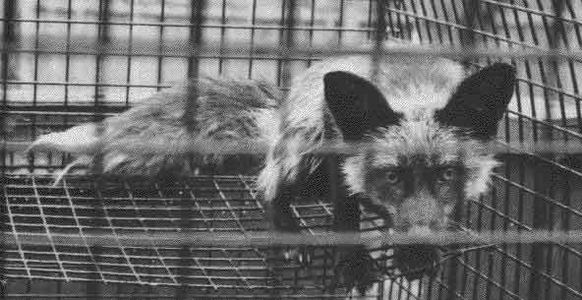
A striking example of a not so obvious type of animal discrimination is the
national regulation that was put into effect on 14th
February 1995. That's when the Dutch House of Representatives
seconded the motion of the then Minister of Agriculture
to ban fox rearing. Although this is a joyous fact,
we think it strange that not the entire fur farms trade
was banned. Eighty-five percent of the fur industry's skins come from animals living captive on fur factory farms.
The minister thinks that animals may be held in captivity, as long as their well being is sufficiently guaranteed.
After a lot of research, foxes appeared unsuitable to be held in captivity.
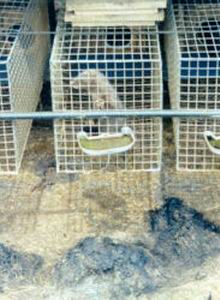
And also with minks in captivity researchers established serious welfare problems, but it is thought that their well being may be "improved".
The minister decided therefore to permanently legalize mink rearing.
The positive thing in our legislation is that we have to take care of animals, but the negative aspect about it is that animals are regarded as objects.
For minks this means that they can wait under controlled conditions in captivity until their skins reach the right proportions and they can be helped out of their coats.
In the summer of 1999 Dutch Representatives called on the Minister of Agriculture to stop mink rearing as well.


 A striking example of a not so obvious type of animal discrimination is the
national regulation that was put into effect on 14th
February 1995. That's when the Dutch House of Representatives
seconded the motion of the then Minister of Agriculture
to ban fox rearing. Although this is a joyous fact,
we think it strange that not the entire fur farms trade
was banned. Eighty-five percent of the fur industry's skins come from animals living captive on fur factory farms.
The minister thinks that animals may be held in captivity, as long as their well being is sufficiently guaranteed.
After a lot of research,
A striking example of a not so obvious type of animal discrimination is the
national regulation that was put into effect on 14th
February 1995. That's when the Dutch House of Representatives
seconded the motion of the then Minister of Agriculture
to ban fox rearing. Although this is a joyous fact,
we think it strange that not the entire fur farms trade
was banned. Eighty-five percent of the fur industry's skins come from animals living captive on fur factory farms.
The minister thinks that animals may be held in captivity, as long as their well being is sufficiently guaranteed.
After a lot of research,