Inbreeding instead of natural selection
A much-used breeding method is line breeding, which is a form of inbreeding.
This method makes animals vulnerable to genetic defects and diseases.
These defects are the direct consequence of inbreeding,
which is the mating between relatives. This is done
to keep and intensify certain breed characteristics.
Natural selection, a mechanism that prevents sickly
or unsuitable animals from reproducing, is kept out
of the breeding programs, because humans are now constantly
looking after the continued existence of the animals.
Underneath we will outline some examples of problems
that arise with breeding on special breed characteristics
that have unfavorable consequences for dogs. |
Chihuahua
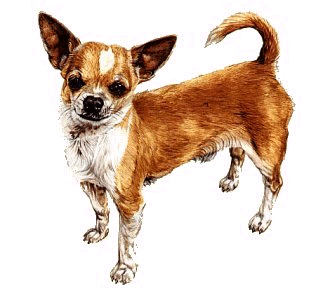 Breed characteristics: large head in relationship
to the body. Consequences: Chihuahua puppies have to be born
through cesareans, because the puppy's heads are too
big for natural birth. There are also instances of open
fontanels ("Chihuahua molera"), which is seen
as a breed characteristic. Breed characteristics: large head in relationship
to the body. Consequences: Chihuahua puppies have to be born
through cesareans, because the puppy's heads are too
big for natural birth. There are also instances of open
fontanels ("Chihuahua molera"), which is seen
as a breed characteristic. |
Pekinese
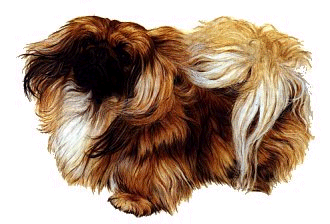 Breed characteristics: short snouts. Consequences: it's not uncommon for a Pekinese's
eyes to pop out of their sockets because these do not
fully enclose the eyes. Breed characteristics: short snouts. Consequences: it's not uncommon for a Pekinese's
eyes to pop out of their sockets because these do not
fully enclose the eyes. |
Boxers
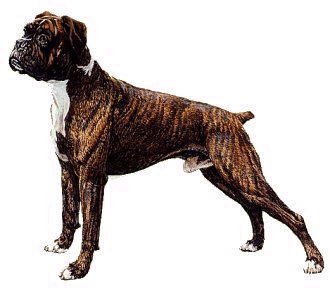 Breed characteristics: short snouts. Consequences: Boxers often suffer from respiratory
problems because of their "flattened" snouts. Breed characteristics: short snouts. Consequences: Boxers often suffer from respiratory
problems because of their "flattened" snouts. |
Dachshund
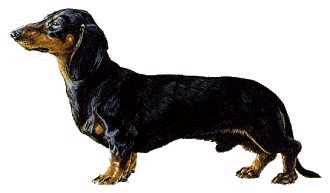 Breed characteristics: long backs. Consequences: Dachshunds may develop ruptured spinal discs
due to their long backs, leading to paralysis and/or chronic pain. Breed characteristics: long backs. Consequences: Dachshunds may develop ruptured spinal discs
due to their long backs, leading to paralysis and/or chronic pain. |
German shepherd
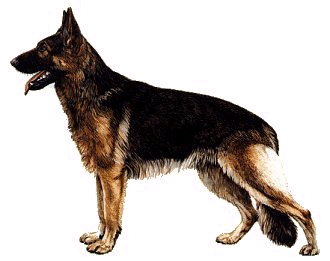 Breed characteristics: sloping backs. Consequences: German shepherds are known for having malformed
and stiff hip joints, which may cause chronic pain. Breed characteristics: sloping backs. Consequences: German shepherds are known for having malformed
and stiff hip joints, which may cause chronic pain. |
Terriers
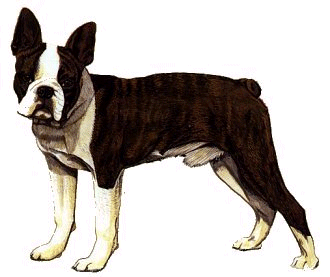 (certain types) Breed characteristics: narrow jaws. Consequences: these Terriers have abnormal bone growth of
the lower jaw that may give them difficulty chewing. (certain types) Breed characteristics: narrow jaws. Consequences: these Terriers have abnormal bone growth of
the lower jaw that may give them difficulty chewing. |
Other consequences of inbreeding
This is just a very small selection of diseases and
defects (heart disease, coronary disease, blood disease,
endocrine disorders, eye disease, skin disease, nervous
system diseases, digestion disorders, joint diseases
and immunological diseases) that can be directly related
to dog breeding.
Constant pain and suffering can be the consequence
of deliberately trying to keep and intensify breed characteristics.
What does the law say?
- United Kingdom: ear cropping is illegal. Since 2007 tail docking has also been banned in England and Wales, except for certain working dogs, which a vet may dock before they are five days old. Licensed breeders in England may not breed from a dog if that is likely to harm the health or welfare of the dog or its puppies. In 2025 Parliament passed a law that also bans the import of dogs with cropped ears.
- The Netherlands: since 2019 dogs with an extremely short muzzle may no longer be used for breeding. Since 2023 the same applies to dogs that have had surgery on their airways. Fold-eared and hairless cats born after 1 January 2026 may no longer be kept.
- Germany: since 2022 dogs with harmful breed traits may no longer be shown at dog shows.
Sources: Docking of Working Dogs' Tails Regulations 2007; RSPCA, ear cropping import law; Dutch government (2023); German Animal Welfare Dog Ordinance (2022). Updated October 2026.
This is done to animals because people think that dogs with a certain appearance
look sweet, nice or beautiful. Almost every dog breed
suffers ill effects from breeding. Please note: everyone
who buys a dog like that is helping to maintain these
breeding practices. As long as there is a demand, there
will be a supply.
Do you think that we have the right to do this to animals?
Unfortunately, these are not the only drawbacks for dogs. |